The Power of the Pound: Why It’s Time to Choose Quality Over Quantity
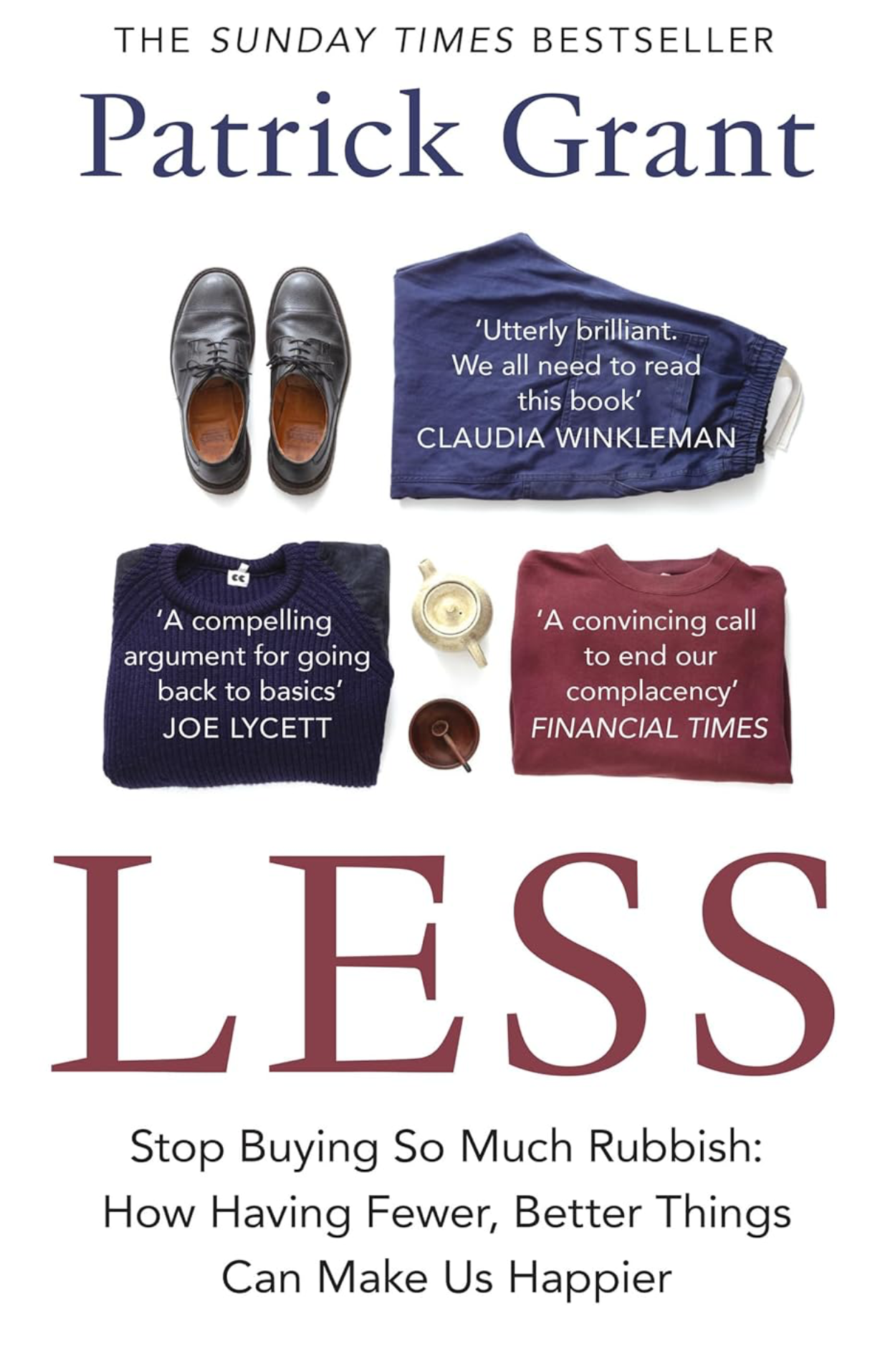
I just finished reading a truly wonderful book called Less, and honestly? It blew my mind. It got me thinking deeply about the way we live, and world we are currently living in—especially here in the UK.
Right now, we are bombarded with noise. We hear about AI threatening to steal five million UK jobs over the next decade. We watch our political landscape shift while the gap between the rich and poor widens into a chasm. According to recent data from The Equality Trust, the richest 10% in the UK hold over 43% of the nation's wealth, while the poorest 50% own less than 5%.
It’s easy to feel overwhelmed, powerless, and stuck on a treadmill of modern anxiety. But what if the antidote to this modern madness is actually incredibly simple? What if the answer is just... less?
How Did We Lose Our Craft Skills?
I am a child of the 1970s. Growing up in that era, "quality" wasn’t a luxury concept; it was a standard. At school, we were all taught practical, hands-on skills: woodwork, metalwork, textiles, and needlework. Everyone had a go. Because of that, we grew up understanding the weight of a good saucepan, the drape of a quality piece of cloth, and the sheer amount of labour required to make something built to last.
Then came a massive cultural shift. By the late 1970s and early 1980s, convenience took over. I distinctly remember the rise of Tupperware parties, which my Mum enjoyed hosting, and my parents making the monumental decision to swap three thriving allotments for a giant freezer when Bejams (the frozen food giant) came to town. My mum hated the smell of the traditional butcher; she preferred the clean, cheap convenience of frozen burgers and fish fingers. Our family's diet became a feast of ultra-processed foods, and our health truly suffered for it.
Unwittingly, we were being conditioned to accept less for the sake of "cheap and fast." Fast forward to today, and that obsession with convenience has broken our systems:
The Death of British Manufacturing: Legendary brands like Pringle of Scotland have offshored their production for pure profit while still trading on their British heritage. Our jobs weren't "stolen" by immigrants; they were given away by corporations to parts of the world where desperate poverty means people work in unsafe conditions for pennies, without the rights we fought so hard for. There are many, many more examples, but listing them all here would take too long!
The Global Waste Crisis: We’ve been sold fast fashion as a harmless dopamine hit, but the environmental toll is catastrophic. Even when we do our best to recycle clothes, they mostly get shipped off to South America. Right now, the discarded clothing pile in Chile’s Atacama Desert is so massive it can be seen via satellite imagery from space. Millions of tons of unsold, synthetic clothes sit baking in the sun, unable to even rot because they are completely non-biodegradable.
Microplastics in Our Oceans: When I was at school, our uniforms were made of wool and cotton. Today, cheap synthetic clothing is responsible for roughly 35% of the microplastics polluting our oceans. Every time we wash a cheap polyester shirt, we poison the water.
What Is Social Prescribing and Does It Work?
It is no wonder that anxiety and depression are at an all-time high. We are disconnected from the earth—living in plastic clothes, eating food wrapped in plastic, and wearing plastic perfumes. And unless you are an artisan maker, your life is likely devoid of the pure joy of creating, and you live in your head most of the time.
Interestingly, even the NHS is starting to realise this. GPs and healthcare providers are increasingly using "social prescribing"—sending patients to community gardens, crafting circles, and nature walks to heal their minds. I’ve worked in a few of these healing gardens myself, and they are truly magical, restorative places for the mind, body, and soul.
This is how we used to live. We used to be valued as crafters. We used to grow our own food. We used to save up for the best we could afford, and when it broke, we mended it.
Over the course of my adult life (I am 53 now at the time of writing this), I noticed how the modern way of living simply wasn't working for me. Having the awareness to live differently, I decided to take my power back. I’ve gone completely the opposite way of my childhood transition. I grow everything I can in my small garden. I get organic, UK-sourced veg boxes and organic milk delivered in glass bottles. My meat supplies are local and organic too.
A very recent shift has taken place in my own herbal dispensary. Over recent years, suppliers—although organic—started sending my bottles of tinctures and oils in plastic. I am currently working to find new suppliers and go right back to my roots: foraging and making my own herbal tinctures. I want to use true craftsmanship to create the best quality products for my clients and their health.
Education with Integrity: Choosing Quality in a System of Quantity
This passion for quality and integrity is exactly why I do what I do today.
During the 2000s and 2010s, I worked in the UK university system. Year after year, I watched funding get slashed and staff get made redundant until single individuals were doing the jobs of three or four people. The system became an assembly line. I watched management push through students who couldn't write a coherent essay, purely because failing them meant losing their tuition income.
As an educator and a therapist with integrity, I couldn't let my name or my karma be tied to a system that compromised on human capability—especially when training future therapists who have the power to do real psychological and physical harm if they aren't properly equipped.
So, I left. I left with a broken heart, because I loved to teach and I adored my students. But I was inspired to do better, choosing quality over quantity.
I’ve spent years developing courses for different training schools and universities, always honing the art of being the greatest teacher I can be. Today, I run just two main courses. I keep my intake intentionally small so every single student gets the deep, focused attention they deserve.
The Herbalist’s Way: This isn't just about playing with plants. I teach you the science of how your body actually works so you can apply herbal medicine safely, effectively, and confidently. Throughout the course, we weave in quality craftsmanship skills, teaching the art of making remedies with the highest-quality organic, natural ingredients.
The Shaman’s Way: This is a deeply sacred, curated journey based on 30 years of my own training, practice, and service. More than 90% of my training was passed down by word of mouth from spiritual mentors and elders across Native American, First Nations, Mayan, Toltec, Celtic, and Northern European lineages. Being a bit obsessive, I wrote down everything I experienced into detailed manuals. I worked incredibly hard to integrate every lesson, practicing techniques repeatedly so nothing of value would be lost. Now, I pass that concentrated knowledge on to my students in the most unique, high-quality course I know of.
Vote with Your Pennies
As much as I would like to believe that our governments are capable and willing to guide us back to balance—a healthy bank balance as much as anything—their actions show they aren’t going to fix this for us anytime soon. The big corporations ruling the cheap, addictive online shopping platforms won't either. The revolution starts in our hearts, our minds, and our wallets.
Every time you spend a penny or a pound, you are casting a vote for the kind of world you want to live in.
Buy less, but buy better. Mend what you can rather than buy new.
Support local artisans, makers, and independent shops. There are also some wonderful online shops like Community Clothing, which focuses on timeless, UK-made apparel, was actually created by Patrick Grant—the very guy who wrote the book Less!
Keep your cash circulating locally to help your community, and therefore your own life, thrive.
Learn a craft. As you work with your hands, you distract the mind and switch off the anxiety. There are so many wonderful courses in my local area I would love to try, from haberdashery and life drawing to woodworking and blacksmithing! Maybe I will see you there?
In the Native American tradition, there is a beautiful phrase: "For all our relations." It means that when we make a choice, we must think of how it benefits everything—the plants, the land, the air, the animals, and each other. If we can make decisions with this in mind, everyone and everything will benefit, from the microcosmic to the macrocosmic.
To directly quote Patrick Grant, “When it comes down to it, will you choose to give your money to Jeff Bezos, or our local Bessy Jeff?”
Stuff doesn’t make us happy—at least, not after the quick dopamine hit subsides. It just makes us greedy for more stuff to chase that fleeting hit again. It’s highly addictive. True joy comes from connection, nature, joyful experiences, and using our hands to craft.
If you are ready to think differently, be happier and healthier, step off the fast-fashion, fast-food treadmill, and re-learn the ancient ways of quality living, I invite you to join me. Let's take our power back together.
Suggested Further Reading
Adaptogens & Ceremony: Allies for Stress, Burnout & Hormonal Balance
Let the Plants Be Your Teachers: A Guide to Working with Plant Spirit Medicine
Want to explore a deeper relationship with the earth and your own well-being? Check out my upcoming courses, The Herbalist’s Way and The Shaman's Way. Spaces are strictly limited to ensure the highest quality of teaching.