Why Gardening is Medicine: The Healing Power of Nature
The Garden as First Teacher
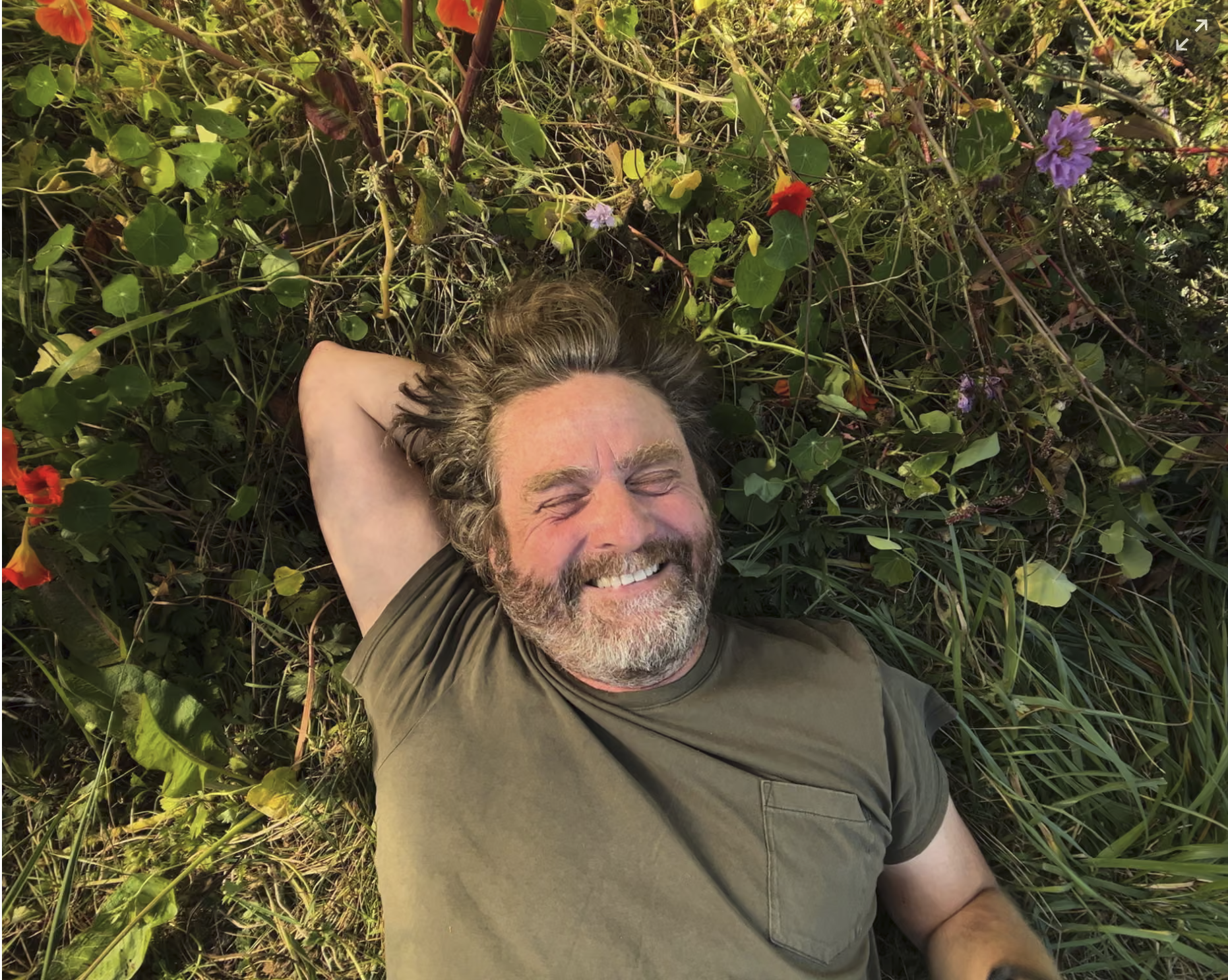
I recently heard the comedian Zach Galifianakis say something in his Netflix show, This is a Gardening Show, that inspired me. He said:
“If I were to offer a remedy to the human condition, it would be a garden.”
It’s a bold statement, but in my humble opinion, there is much truth in these words.
For me, that "remedy" started long ago and continues to this day. As a child, I would lose myself purposefully among the daisies, hunting for bugs, collecting caterpillars to watch them turn into butterflies and observing snails, which I would mark with a dot of paint so I could recognise them again on my daily hunts, a mini-scientist with a mini-mission. I would make herbal tea for my toys made from fresh fennel leaves, and have herbal tea parties with them on our daisy-strewn lawn. The family garden was my happy place, and without being consciously aware of it, the plants and the critters were my friends, teachers and allies.
Many of my clients also bring up similar memories of happiness and a soulful connection with nature as a child when we work together, especially in the shamanic healing work we do. Recovering parts of their soul, spirit, consciousness from the wild places they played in as children - the magical natural spaces where we believed the fairies live, or in Grandparents’ garden, picking and eating delicious fresh vegetables or gathering wild berries from hedgerows. As we grow up, other things feel more important; we are taught they are too. We go to school to learn how to be good citizens. And in the civilisation process, we lose a part of ourselves, the part that knows it is entwined intimately with the natural world, and so often the naturally joyful, wild part of us is lost.
From Survival to Sanctuary
I also lost my connection for a while, through schooling, and then early adulthood, as I got lost in the world of midnight music raves, as happened to many of us in the 90s! But it didn't take long before nature called me home to myself. In my early twenties, whilst recovering from a couple of years of intense drug experimentation and also a difficult, traumatic childhood, I remembered gardening as a way to be with myself peacefully. Gardening began to be my way of being alive and just "OK" without chemical stimulants or sedatives to control my mood. On reflection, the drugs were a kind of weedkiller to my soul; each time I took them, I was left a little bit weaker. In the garden, it wasn't necessarily about buzzing with joy - like I would feel after a tab of ecstasy, but when I focused on weeding or planting seeds, I would forget my past, I would become present in the moment, and feel peaceful and at home. This was nature’s wonderful meditative gift that nothing except drugs had gifted me since my early years of chasing snails.
Soon after this phase of my life, I went to university to study Herbal medicine, because herbs had been integral in my own recovery, I wanted to share this healing modality with the world. I was certain that horticulture would be a part of our training, but it wasn't even glanced at. My learning has not been a professional one; it has been through reading books, watching Gardnerner's world, researching online, and generally practising through trial and error. My point is, I am not that special - we can all garden, if we just give it a go!
Now, coming back to the present day, I have been in my Margate coastal garden for ten (and a half) years, and it is finally looking established. This one was hard to get growing; it has rubble several feet deep. Any space that needs to be dug requires a pneumatic drill to make space - up come rocks, old bricks, concrete, and all sorts of debris. It has taken much longer than expected, and to see this ten-year project now feeling established brings me so much joy and peace. Now I can sit and meditate, surrounded by the buzz of insects, the chirp of multiple bird species, and the beauty that the plants and nature bring through the seasons. I do still hunt snails, but now they get fed to my chickens. As a gardener, snails are no longer my best friends - sorry guys, but it’s better than pesticides!
The Science of Getting Your Hands Dirty
We often treat gardening as a "nice-to-have" hobby, but science suggests it is a biological essential. It is as if our bodies were designed to be in constant conversation with the earth.
The Antidepressant in the Soil: There is a bacterium in soil called Mycobacterium vaccae. Research shows that when we garden, we inhale it or absorb it through our skin, which stimulates serotonin production in the brain. It is quite literally a natural antidepressant that we can access just by weeding.
Lowering the "Stress Signal": Studies have shown that gardening lowers cortisol (our stress hormone) more effectively than almost any other form of relaxation. The rhythmic, repetitive nature of deadheading or digging pulls the brain out of "fight or flight" and into the steady rhythm of the present moment.
The Medicine of Petrichor: We all know that magical, earthy scent that rises when rain hits dry earth. That smell is called petrichor, caused by a soil-dwelling compound called geosmin. Humans are incredibly sensitive to it—we can smell it at a concentration of five parts per trillion! Evolutionarily, it signalled life and water to our ancestors, and today, inhaling that scent is shown to have a grounding, almost instantaneous calming effect on our nervous system. It’s the earth’s way of telling our bodies: "You are safe; life is flourishing here."
The "Green Pulse" (Fractal Healing): Even if you aren't digging, just looking at plants helps. Plants grow in "fractal" patterns—self-repeating shapes like those in a fern frond or the petals of a dahlia. Research shows that our eyes are hard-wired to process these specific patterns with ease. When we look at them, our brains produce alpha waves, the same waves associated with a relaxed, meditative state. The garden isn't just pretty; it’s a visual sedative.
Gardening with a Community
When I first moved to Margate, I took on the role of community gardener at local community allotments, holding space for groups of adults referred by their GPs for mental health reasons or long-term unemployment. It was such a joy to watch not just the plants blossom, but the people and the community as a whole.
We also had groups of children of different ages come on different days. We had so much fun, giving them space to be wild - playing, exploring, looking closely at the life that existed all around us there - the critters that lived in the pond and hedgerows. And one of the best parts was making snacks out of the different fruits and vegetables we grew there. I will never forget the delicious taste of gooseberries infused with elderflower syrup that we made together as an experiment.
The thing I loved most about my time working in community gardens was how the class system simply ceased to exist. When you are planting a row of strawberries, hands dirty from working the soil, it doesn’t matter what your bank balance is or what your job title used to be. The garden is the great leveller. We are all equal in the eyes of the earth.
The Power of a Herbal Tea
The heart of those community days was the tea breaks. I started brewing tea for our group from the herbs that grew in our garden. Rosemary and Lemon Balm were the favourites.
I knew, from my Herbalist training, that for these people referred for mental health reasons, this brew was great medicine. The Rosemary was clearing their minds and healing the adrenal glands from stress, and the Lemon Balm was calming their nervous systems and soothing their often broken hearts. Drinking something that was growing in the earth five minutes ago was also a powerful reminder that we are part of a cycle that is much bigger—and much more resilient—than our daily worries. It also taught them that nature has their back, that nature wants you to be well, and has everything you need if you just know where to look.
How to Start Your Own Garden Remedy
Gardening comes in many forms. There are the "fast" ways—buy plants and observe them in pots, or dig a hole if you can! Or the "slow" ways—planting a tree and watching it come into its fullness over the years.
If you are looking to get your hands in the earth, here is how to start:
The Windowsill: If you have no outdoor space, herbs like Mint, Lemon balm, Thyme or Basil thrive indoors and offer immediate sensory relief, and a delicious brew too!
The Community Way: Join a community garden project or volunteer at an RHS garden. You’ll work with people who can teach you as you go.
Find Your Tribe: Use resources like Social Farms & Gardens or the RHS website to find local groups near you.
If you’re feeling the weight of the "human condition" lately, my best advice isn't a product or a complicated ritual. It’s just an invitation to go outside. Get some dirt under your fingernails.
The garden is waiting, and it's most likely the best medicine we will ever know.