The Breath of Spring: Navigating Hayfever Season Naturally

Spring is a season of paradox. While we welcome the first threads of warmth and the explosion of green, for many of us, it marks the return of the "itch"—that familiar tightening in the chest, the prickle in the eyes, and the endless sneezing that signals the arrival of hayfever.
Our breath is the thread that connects us to life itself. Every inhale draws in oxygen to nourish our cells, and every exhale releases what we no longer need. But when the air is thick with pollen, this automatic process becomes a source of strain.
If you’re feeling "clogged up" or reactive this season, it’s often a sign that your respiratory system is working overtime. The good news? Nature provides the very tools we need to find our rhythm again.
Understanding Seasonal Allergies: The Histamine Response
In my clinic, I often explain that the lungs don't work in isolation. They collaborate with the heart, skin, liver, and kidneys. When our system is overburdened—whether by stress, poor digestion, or environmental toxins—the lungs often take on the extra load. This manifests as:
The "Heavy" Chest: Feeling like you can’t catch a full breath.
The Over-Drip: Excess mucus (catarrh) as the body tries to "wash away" irritants.
The Emotional Weight: In Traditional Chinese Medicine, the lungs are tied to grief. Ever notice how a heavy heart makes for a shallow breath?
Top Antihistamine and Anti-Inflammatory Herbs for Hayfever
We don't just want to "stop" the symptoms; we want to support the body’s intelligence. Here is how we can use different herbal "actions" to get through the high-pollen days.
1. The Natural Antihistamines (The "Peacekeepers")
Instead of just reaching for the pharmacy shelf, look to the garden.
Nettle: Ironically, the plant that stings is the one that soothes. Nettle is a powerhouse antihistamine that helps modulate the immune response.
Chamomile: Not just for sleep! It reduces histamine and calms the nervous system—perfect if your allergies are flared by stress.
2. Anticatarrhals (Reducing the "Drip")
If you’re dealing with stubborn mucus sliding down the back of your throat or clogging your sinuses, you need herbs that "dry and tone."
Elderflower & Eyebright: These are my go-to's for sinus congestion. They help dry excess mucus and tone the membranes.
Goldenrod: Excellent for those who feel "soggy" and congested throughout the spring.
3. Demulcents (The Soothing Hug)
If your hayfever comes with a dry, scratchy throat or a "raw" feeling in your chest, you need mucilage.
Marshmallow Leaf & Plantain: These act like a cooling, protective coating for irritated tissues. Plantain is particularly wonderful if the inflammation extends to your ears and sinuses.
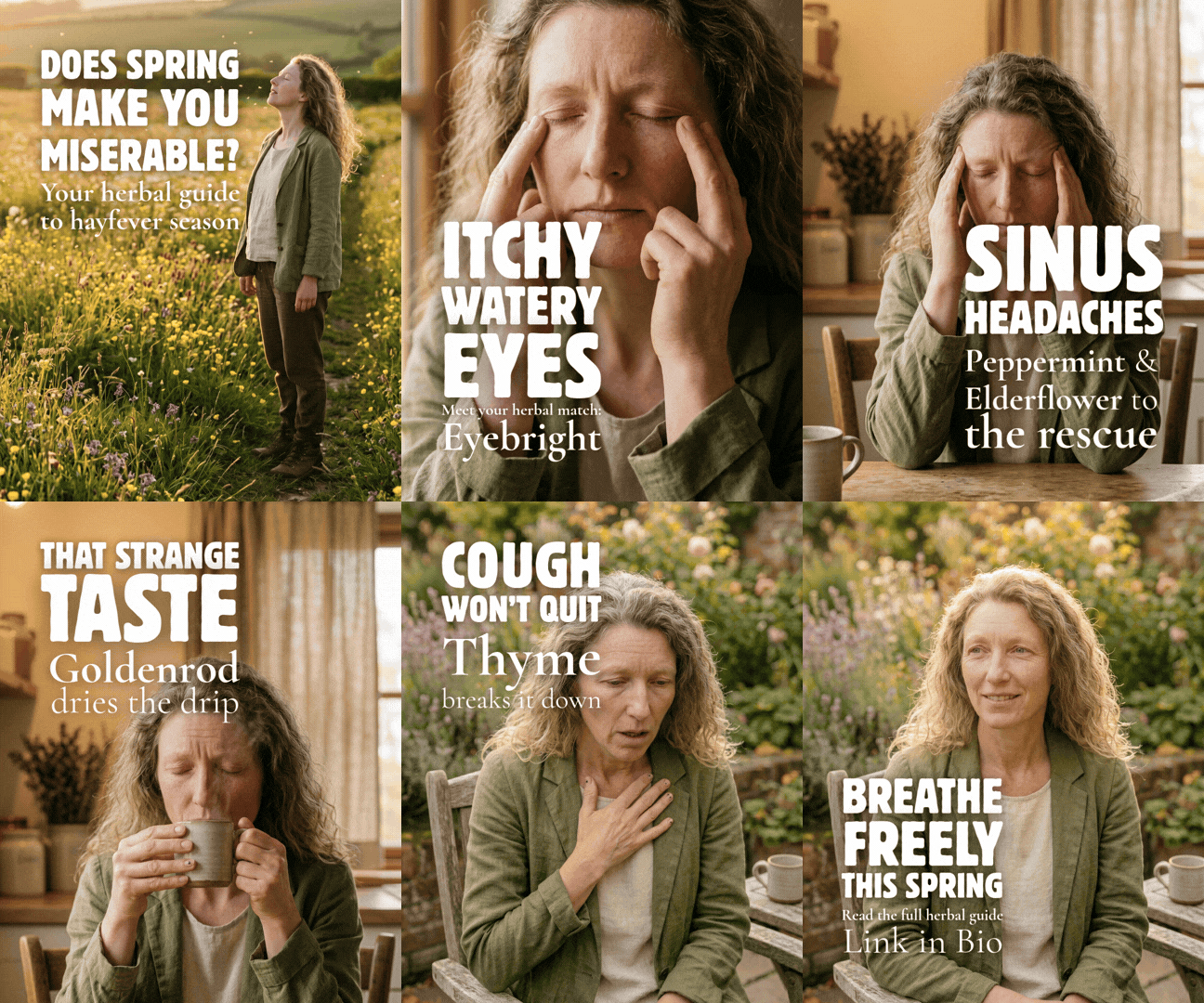
| Symptom | Herbal Ally | Why it works |
|---|---|---|
| Itchy, Watery Eyes | Eyebright | Specifically targets ocular irritation and redness. |
| Sinus Headaches | Peppermint & Elderflower | Relieves pressure and soothes vascular tension. |
| The “Funny Taste” | Goldenrod | Dries post-nasal drip that ruins your palate. |
| Persistent Cough | Thyme | A “mucolytic” that breaks down sticky phlegm. |
A Note on Finding Your Match
Finding the right herb for your lungs is much like finding the right one for your mood - it must match your individual pattern. One person’s "stuck" cough needs an expectorant to move things along, while another’s "dry" cough needs a soothing demulcent to quiet the irritation.
Pro Tip: If your chosen herb doesn’t seem to be helping after a few weeks, there may be deeper imbalances in your digestion or circulation. This is where a qualified herbalist can help unravel the pattern and find a blend unique to your constitution.
Breathe Deeper This Season
You don't have to hide indoors until June. By leaning on our "herbal allies," we can soothe inflamed tissues, strengthen our lung resilience, and finally take that deep, clear breath we’ve been waiting for.
The "All-Clear" Action Plan: Your Seasonal Strategy
Now that we understand the why, let’s get into the how. Hayfever isn't a one-week event; it moves in waves. Tree pollen peaks in spring (March to May), followed by the grass pollen surge (May to July), and finally weed pollen. Because these "phases" overlap, you need a strategy that lasts as long as the sniffles do.
The "Season-Long" Tea Formula
To ensure your herbal support lasts through the transition from trees to grasses, we’re upping the batch size.
The Recipe (Equal Parts):
Nettle: The histamine balancer.
Eyebright: For the "itchy and watery" eyes.
Elderflower: To drain the sinuses.
Peppermint: To cool the system and clear the head.
Chamomile: To soothe the allergic "fire."
The Math: Your Seasonal Supply
The Mix: Buy 50g of each herb (5 herbs total) = 250g of tea blend.
The Jar: Mix these in a large, airtight glass jar. Store it in a cool, dark cupboard to preserve the medicinal potency for the next few months.
The Lifespan: At a therapeutic dose of 1 heaped teaspoon (2g) per cup:
3 cups a day: This batch will last you ~42 days (6 weeks).
6 cups a day (peak symptoms): This batch will last you ~21 days (3 weeks).
The "Pro-Traveller" Hack: Self-Fill Tea Bags
If you’re travelling or heading to the office, don’t let the loose-leaf format stop you. You can buy "Self-Fill" Tea Bags (sometimes called Drawstring Tea Filters or Empty Tea Sacs).
The Hack: Spend 10 minutes filling 20–30 bags with your blend. Pop them in a small tin or reusable pouch. Now you have "on-the-go" medicine that’s far higher quality than anything you’d buy at the supermarket. Just add hot water and steep for 5-10 minutes.
The "Bio-Hack" for Histamine: Kidney Capsules
If you’ve tried the herbs and still feel like your "histamine bucket" is overflowing, there is a secret weapon: Desiccated Beef or Lamb Kidney Capsules.
Why Kidney? Our bodies use an enzyme called Diamine Oxidase (DAO) to dismantle histamine. Many hayfever sufferers are DAO-deficient. Kidney is the highest natural source of this enzyme. Taking a kidney capsule provides your body with the "clean-up crew" it needs to break down histamine before it triggers a reaction. It’s a game-changer for those with high sensitivity.
Comparison: Tea vs. Capsules
| Method | Cost | Effectiveness | Convenience |
|---|---|---|---|
| Loose Leaf Tea | Lowest (£) | High (Hydrating + Immediate) | Low (Needs a pot/bag) |
| Herbal Capsules | High (£££) | Moderate (Requires digestion) | High (Grab and go) |
| Kidney Capsules | Moderate (££) | High (Enzymatic support) | High (Pre-meal/Pre-pollen) |
Ready to Stock Up?
Where to buy? I can recommend Starchild for organic herbs.
For all your capsule needs, head to my favourite supplier - The Natural Dispensary - and use the code Chamomile015 to get 15% off any order.
Breathe Deeper this Season
Remember, your respiratory system is your connection to the world. Don't let the season leave you feeling constricted. Support the "clean-up crew" in your body, and you'll find you can breathe through the blooms with significantly more ease.