What Happens When You Consult a Medical Herbalist?
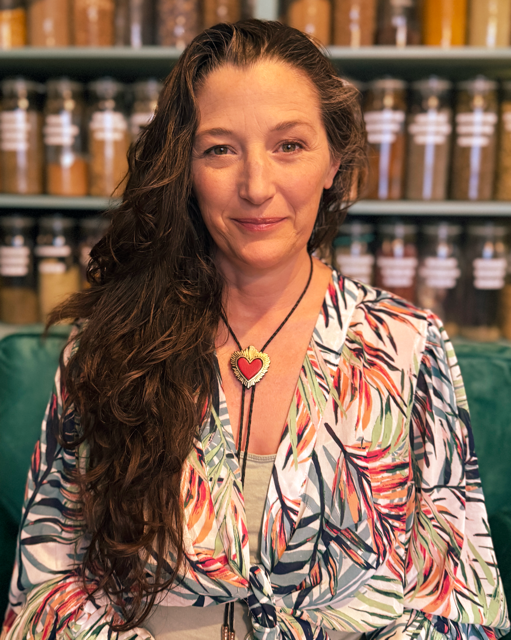
If I had to choose just one word to describe myself, it would be "Herbalist."
Before the shamanic work. Before the ceremonies. Before the gongs.
Herbalist.
Because I love it.
I love it because it works.
Not in a theatrical, waving-wands kind of way — but in a grounded, physiological, quietly astonishing way.
People often come to me at the end of their tether. They’ve done the therapy. They’ve explored the emotional roots. They’ve seen their GP. They’ve received a diagnosis. They’ve tried the medication — sometimes it helped, sometimes it didn’t, sometimes the side effects felt worse than the original problem.
And then they try herbs.
Very often — within days, sometimes weeks — something shifts.
Sleep returns.
Hot flushes ease.
The mind quietens.
Digestion settles.
Pain softens.
They feel much more like themselves again.
And yes — when someone emails to say, “I feel so much better,” my ego probably swells a tiny bit, because I know I was a part of their healing journey, and I enjoy seeing successful results. But what I truly love is watching someone reconnect to their own vitality. Watching their body remember how to regulate itself. Watching plants do what they’ve quietly done for thousands of years.
The joy of watching the people I work with blossom is why I continue to practice this ancient art and science. And it’s also why I take this work seriously and dedicate my life to it.
What Is a Medical Herbalist?
In the UK, anyone can legally call themselves a ‘herbalist’.
There is no statutory regulation. Someone may have completed a short course… or a four-year honours degree. From the outside, it can be impossible to tell the difference.
I trained for four years at Middlesex University and graduated with a BSc (Hons) in Herbal Medicine.
My training included:
Anatomy and physiology
Pathology
Pharmacology & Pharmacognosy
Clinical diagnostics
Botany
Herbal formulation
Counselling skills
Clinical aromatherapy
History of medicine and more!
I was trained by doctors, herbalists, botanists, pharmacists and pharmacologists. I was examined clinically. I completed two years in a supervised clinic, followed by two years of postgraduate supervision. I also apprenticed with a Traditional Chinese herbalist and a shamanic herbalist.
That means I understand the body from a Western medical perspective — and I understand how herbs and pharmaceuticals interact within that system.
Herbal medicines are not “just plants.” They are active, often extremely powerful medicines with pharmaceutical actions.
Some of the tinctures I prescribe are stronger than anything you can buy in a shop, and definitely better quality and fresher. I also have access to certain herbs that are not available over the counter because they require proper supervision.
For example:
Chelidonium for specific liver patterns
Ephedra for allergies and asthma
This is not casual plant use. My apothecary/dispensary is made up of powerful plant-based medicines.
What Actually Happens in a Herbal Medicine Consultation?
When I meet a client for the first time, this first consultation usually lasts around 90 minutes — sometimes up to two hours. Because we want to understand exactly what the complete picture of health is.
We don’t just talk about “the symptom.” We explore the whole terrain:
Full medical history
Current and past medications
Hormonal patterns
Digestive function
Sleep
Emotional wellbeing
Stress levels
Family history
Lifestyle
I use Western diagnostics frameworks, alongside oriental perspectives and tongue diagnosis and when necessary, my shamanic insights to refine my understanding and choose herbs accurately.
If needed, I liaise with GPs or recommend appropriate testing — NHS or private — so we’re working from clarity rather than guesswork.
Then I formulate a bespoke prescription — every time.
Each formula is prepared using high-quality herbal medicines, organic wherever possible, and dispensed in the most appropriate form: liquid tincture, powder, or medicinal tea. Where clinically indicated, we may also incorporate capsules, probiotics, topical creams, or medicated oils.
This is not a standardised blend. It is not a pre-prepared formula. It is a prescription designed specifically for your presentation.
A single formula may contain ten, fifteen, sometimes up to twenty herbs — each selected for its specific action, each carefully balanced in precise dosage to ensure synergy, safety, and effectiveness.
Where appropriate, I may also include vibrational flower essences. While the herbal medicines act pharmacologically on the body, flower essences are used to support emotional regulation and psychological resilience, allowing treatment to address both physiological and psycho-emotional aspects of health.
This is individualised medicine — considered, responsive, and clinically grounded.
And we review regularly, at first every 2-4 weeks, then if we need to work longer term, we meet at least every three months, because as you change, your medicine should change too.
Most people notice steady improvement within three to six months. Sometimes the shift happens quickly; sometimes it unfolds more gradually.
Many clients return whenever life throws them another curveball — and some have been walking this path with me, on and off, for more than 25 years.
There’s an old herbalist’s guideline that I’ve found holds more often than not:
For every year a condition has been present, allow around a month for the body to rebalance.
For every month of illness, allow roughly a week.
It isn’t rigid — the body doesn’t work to a stopwatch — but it’s a surprisingly realistic framework.
Why I Can’t Just Tell You “What Herb Is Good For…”
This is one of the most common questions I’m asked.
“What’s good for anxiety?”
“What lowers blood pressure?”
“What detox should I take?”
“What helps sleep?”
“What helps cancer?”
The truthful answer is: it depends.
There are many kinds of anxiety.
Lemon balm might help with a bipolar pattern.
Skullcap may help with intrusive thoughts.
Blue lotus may help with nervous insomnia.
Same symptom. Different root. Different herb.
Hawthorn is beautiful for blood pressure — it strengthens and balances the heart. But if someone is already on medication, we must work alongside their GP because the combination may require dosage adjustment.
“Detox” of what? Liver? Gut? Kidneys? Skin? Some shop-bought detox formulas are so heating they can make you feel worse, especially symptoms like menopausal hot flushes.
The same herb can help one person and aggravate another.
And that is why individual consultation and prescription matters and makes such a big difference to your likelihood of success.

“But I Googled It…”
Of course you did. We all do.
You type in your condition, and within seconds, you’re presented with:
“Top 7 Herbs Doctors Don’t Want You To Know About”
A blog promising to reverse everything in three days
A forum thread with 400 contradictory opinions
The modern problem is not a lack of information. It’s too much of it.
You can Google any condition and find dozens — sometimes hundreds — of confident recommendations.
So how do you choose?
How do you know:
Which herb is right for your physiology?
What dosage is appropriate?
Whether it should be taken as a tea, tincture, powder or capsule?
How long to try it?
What signs to look for that show it’s working?
What signs mean “stop immediately”?
Herbal medicine is not “pick a plant and hope.”
It’s pharmacology.
It’s physiology.
It’s pattern recognition.
It’s experience.
Panax ginseng is a good example.
It’s fashionable. It’s marketed as an energy tonic. It appears in countless supplements.
But used incorrectly, it can overstimulate the nervous system, aggravate certain infections, interact with blood-thinning medications, and increase anxiety in already wired systems.
I once worked with a gentleman who had felt flu-like for nearly two years before he consulted me. The solution wasn’t adding more herbs — it was removing his Panax ginseng supplement, which he believed would support him, but had instead been strengthening the very viral pattern we were trying to calm.
Trends come and go. Some deserve the hype. Many do not. And many times, the full picture is not explained in an advertisement trying to sell you a product.
When you’ve spent decades studying herbal pharmacology and watching real human bodies respond in clinic rooms, you develop discernment.
That discernment is what people are really seeking, to see the needle of truth in a haystack of information. Not a list to experiment with until we are exhausted. I personally believe we all deserve a professional level of clarity when it comes to sourcing solutions for our health problems. And I am sorry it is not currently available on the NHS, because I think we are really missing out on a vastly healthier population by not integrating it.
Legal and Ethical Boundaries of a Medical Herbalist
Under UK law (including exemptions under the Medicines Act 1968), medical herbalists are permitted to blend and dispense medicines directly to their own patients after consultation. We formulate ourselves to maintain responsibility and quality of care.
We are not legally allowed to diagnose medical conditions — that remains the role of your GP.
We cannot legally treat certain diseases, such as cancer. What we can do is support the whole person alongside medical care.
I swore to uphold “first do no harm” when I joined the National Institute of Medical Herbalists over 25 years ago.
Sometimes that means saying: “This needs a doctor.” Acute situations require an acute response.
If someone hasn’t urinated for three days and is hallucinating (yes, I have seen this in my clinic!), that is not a parsley tea moment; we call an ambulance!
Part of being properly trained is knowing when herbs are helpful — and when they are not.
Where Herbal Medicine Truly Shines
Herbs are extraordinary in areas where conventional medicine often has limited answers:
Hormonal issues such as Endometriosis, PCOS, Perimenopause and menopause
Fertility challenges
Chronic digestive issues
Chronic fatigue or Long Covid
Anxiety, Depression, Insomnia and burnout
Autoimmune disorders such as arthritis
I am not anti-pharmacy. If you are in a car accident, please choose the ambulance. If antibiotics are necessary, take them.
But there are many situations where herbs restore balance gently and effectively — often more comfortably than pharmaceuticals.
I’ve seen sleep return after years of insomnia. Hormonal chaos restored back into rhythm. Digestive systems recalibrate — my own included, more than once. Nervous systems steady after overwhelming experiences or years of anxiety/depression. I’ve supported couples who longed for a child and finally held one in their arms. I once helped a woman stand and walk unaided after being told her arthritis was so advanced she would never manage to get out of her wheelchair again.
These moments stay with you. I won’t pretend it always works. Nothing does. Bodies are complex. Life is complex. But it works often enough — and deeply enough — that I remain wholeheartedly devoted to this path.
And just as importantly, I know when herbs are not the right tool. I refer to a GP when medical care is needed. I suggest other modalities when they are more appropriate. Because good medicine is not about ideology. It’s about choosing what genuinely serves the person in front of you.
Going Deeper with Herbal Medicine
There are three main ways I support people in working with herbal medicine — depending on where you are, and what you’re seeking:

1-2-1 Clinical Work
If you would like personal, tailored support, we begin properly — with a full consultation, thoughtful formulation, and safe, responsive care.
This is for those who want to explore their health in depth. Not a quick fix, but a considered plan. A bespoke formula. Ongoing review. Integration with your wider medical picture, where needed.
You don’t have to navigate it alone.
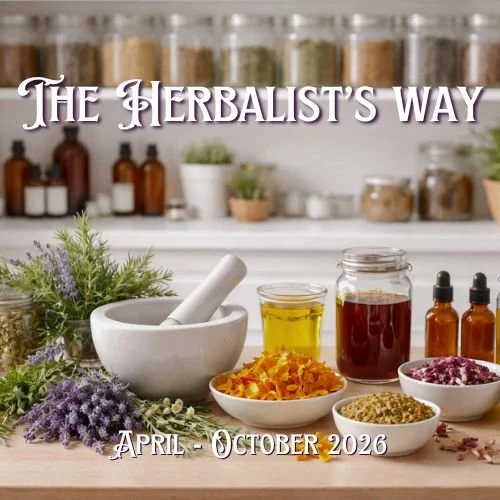
The Herbalist’s Way
If you feel called to understand herbal medicine for yourself — to gain the confidence to support your family wisely and safely — then The Herbalist’s Way is my foundational training.
Over seven months (April to October), we journey through the body system by system, learning:
How herbs work physiologically
Safe dosage and contraindications
Medicine-making skills
When to treat at home
When to seek professional support
How nutrition and herbal medicine integrate
It’s practical. Grounded. Empowering.
This is not guesswork or folklore — it’s intelligent self-care, taught through decades of clinical experience.
There are just a couple of places remaining this year, as I keep the group intentionally small.
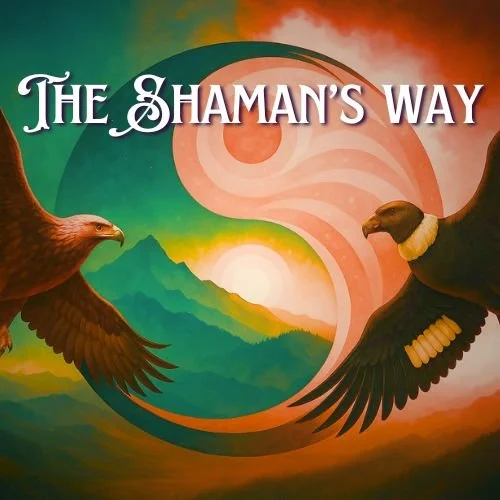
The Shaman’s Way — 13 Moons Journey
And if your heart pulls you toward a deeper relationship with plants — not just as medicines, but as allies, teachers and guides — then The Shaman’s Way may be calling.
This is a year-long, 13 Moon journey around the Medicine Wheel.
We work gently and ceremonially. We meet the plants as living intelligences. We explore the directions, the elements, the cycles of nature, and the unfolding of your own path.
It is grounded shamanism — safe, heart-led, and deeply transformative.
The journey begins in March. We step through the year together, moon by moon, walking the spiral of remembrance.
Places are limited because the circle is carefully held, so you get individual support, and I can truly support your evolution.
Final Thoughts
Herbal medicine is not guesswork.
It is chemistry.
It is physiology.
It is a tradition refined by science and clinical experience.
It is, in my view, the ultimate mind, body and spirit medicine!
And when practised well, it can feel quietly miraculous — not because it overrides the body, but because it helps the body remember how to heal and rebalance itself again.
Seeing you blossom, working with plants as your healers, is the work I truly love.